
- 28/10/2026
- by Dr. Pinak Dasgupta
- Blog
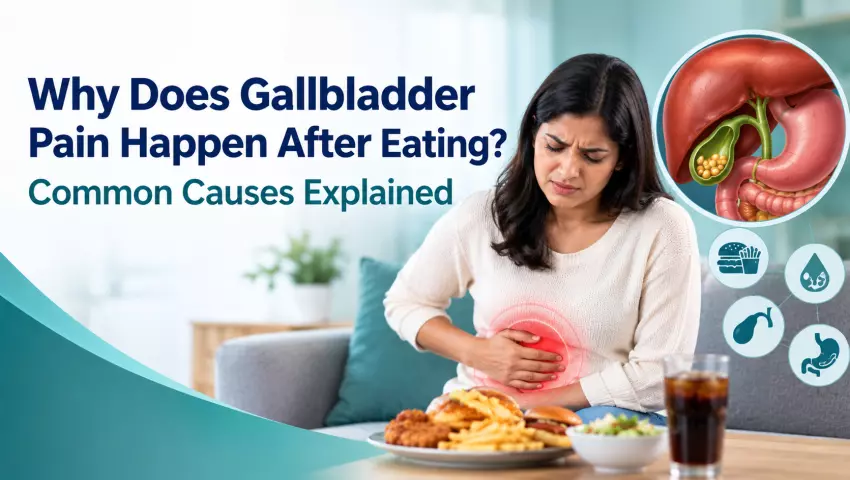
You finish a good meal. Maybe it was a plate of biryani, a few pakoras with evening chai, or a rich family dinner. An hour later, a dull ache starts under your right rib cage. Slowly, it turns sharp, and sometimes it travels to your back. You wonder: is this gas, acidity, or something else?
If this sounds familiar, you are not alone. Many people live with gallbladder pain after eating for months, simply because it goes away on its own. The trouble is, it usually comes back, and often stronger.
So what is really happening inside your body, and why does the pain show up only after meals? In this blog, Dr. Pinak Dasgupta, a Gallbladder Surgeon in Chennai at ALVUS Care with 21 years of experience, explains the common causes in simple language. He hears this exact complaint from patients almost every week.
How the Gallbladder Reacts When You Eat?
- Your gallbladder is a small, pear-shaped pouch under the liver.
- It stores bile, a digestive fluid made by the liver, and releases it when you eat.
- When fatty food reaches your small intestine, the gallbladder squeezes and pushes bile through the bile duct.
- This bile helps your body break down and absorb fat.
- In a healthy gallbladder, you never notice this.
- If the gallbladder is inflamed or something blocks the way, the squeeze meets resistance. Pressure builds, and pain starts, usually 30 minutes to a few hours after the meal.
- The typical gallbladder pain location is the upper right abdomen or the centre of the upper belly, sometimes spreading to the right shoulder or back.
- Gallbladder attack symptoms often include nausea and bloating.
- If you often get upper right abdomen pain after eating, your gallbladder deserves a closer look.
- How long does gallbladder pain last after eating? A stone attack usually settles within a few hours. Pain that goes on longer may point to inflammation.
Common Causes of Gallbladder Pain After Eating:
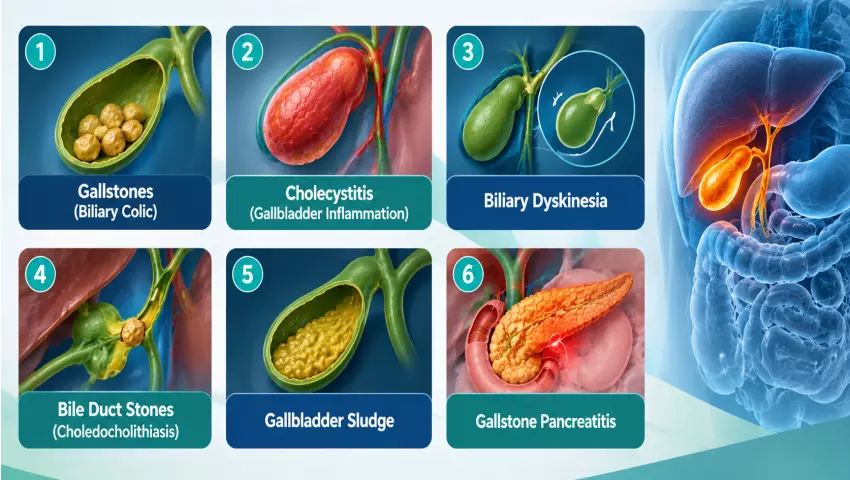
There is rarely just one reason. Here are the most common causes of gallbladder pain, along with the gallbladder symptoms that go with each.
1. Gallstones (Biliary Colic):
Gallstones are the number one cause. These are hard deposits of cholesterol or bilirubin that form inside the gallbladder. They can be as small as a grain of sand or as large as a golf ball.
Here is how gallstones form: bile gets out of balance, with too much cholesterol, too much bilirubin, or a gallbladder that does not empty fully. As a laparoscopic surgeon in Chennai, Dr. Dasgupta often finds that many people carry stones for years without any problem. Pain begins when a stone blocks the gallbladder outlet during a contraction. This sudden, intense pain is called biliary colic. It usually lasts from 30 minutes to a few hours, and it is the classic one among gallstone symptoms.
2. Cholecystitis (Gallbladder Inflammation):
If a stone stays stuck, the gallbladder becomes swollen and inflamed. The pain is then steadier and lasts longer than a few hours. Typical cholecystitis symptoms include pain with tenderness in the upper right abdomen, fever, nausea, and vomiting. This needs medical attention quickly.
3. Biliary Dyskinesia:
Sometimes the scan shows no stones at all, yet the pain is real. In biliary dyskinesia, the gallbladder does not empty properly because of poor function. The pain feels very similar to a stone attack, which is why this cause is often missed for a long time.
4. Bile Duct Stones (Choledocholithiasis):
Here, a stone leaves the gallbladder and gets stuck in the bile duct. Along with pain, you may notice yellow skin or eyes, dark urine, pale stools, or fever. These are warning signs and should not be ignored.
5. Gallbladder Sludge:
Sludge is a thick mixture of bile salts and cholesterol crystals. It often appears after rapid weight loss, pregnancy, or long gaps between meals. It can cause pain on its own, and over time it may turn into stones.
6. Gallstone Pancreatitis:
When a stone blocks the duct that the gallbladder shares with the pancreas, the pancreas becomes inflamed. This causes severe upper abdominal pain that travels to the back, along with repeated vomiting. This is an emergency.
Gallbladder pain vs. acid reflux:
Acid reflux usually burns in the chest and improves with an antacid. Gallbladder pain sits deeper in the upper right side, builds up after a heavy meal, and does not settle quickly with antacids.
Why Fatty Meals Make the Pain Worse?
Fat is the strongest trigger for gallbladder contraction. So after a fried or creamy meal, your gallbladder squeezes harder than usual. If a stone or sludge is in the way, a harder squeeze simply means more pain. This is why gallbladder pain after eating fatty food is so common, and why pain after eating fatty foods is often the first clue.
Foods that trigger gallbladder pain most often include:
- Fried snacks like samosa, pakora, and puri
- Ghee-heavy or butter-heavy gravies
- Cream, cheese, and full-fat sweets
- Red and processed meats
- Very large meals eaten quickly
Many people notice right-sided pain after eating at night. This is because dinner is often the heaviest meal of the day, and lying down soon after eating does not help.
Risk Factors That Make These Causes More Likely:
Anyone can develop gallbladder problems, but some people are at higher risk:
- Women, especially during pregnancy or while taking hormonal medicines
- People above 40 years of age
- Obesity or being overweight
- Rapid weight loss or crash dieting
- Family history of gallstones
- Diabetes
- A diet high in fat and low in fibre
As a Robotic Surgeon in Chennai, Dr. Dasgupta often meets young working adults who developed stones after strict crash diets. Losing weight is good, but doing it too fast can disturb the bile balance.
Conclusion:
So, why does your gallbladder hurt after eating? In most cases, food makes the gallbladder contract, and a stone, sludge, inflammation, or poor function gets in the way. Gallstones are the most common reason, but other causes can feel the same.
Do not wait if the pain lasts more than a few hours, or comes with fever, yellow eyes, dark urine, or repeated vomiting. Right-sided pain after eating that keeps repeating also warrants a proper check-up.
If you are in Chennai and want clarity, you can consult Dr. Pinak Dasgupta at ALVUS Care. With 21 years of experience as a gallbladder surgeon and laparoscopic surgeon in Chennai, he will help you understand the cause of your pain in plain language.