- 21/10/2026
- by Dr. Pinak Dasgupta
- Blog
For most people, the words “rectal surgery” bring to mind a large abdominal cut, a long hospital stay, and the fear of living with a stoma bag. A recent case from Chennai shows that, for carefully selected patients, it does not always have to be that way.
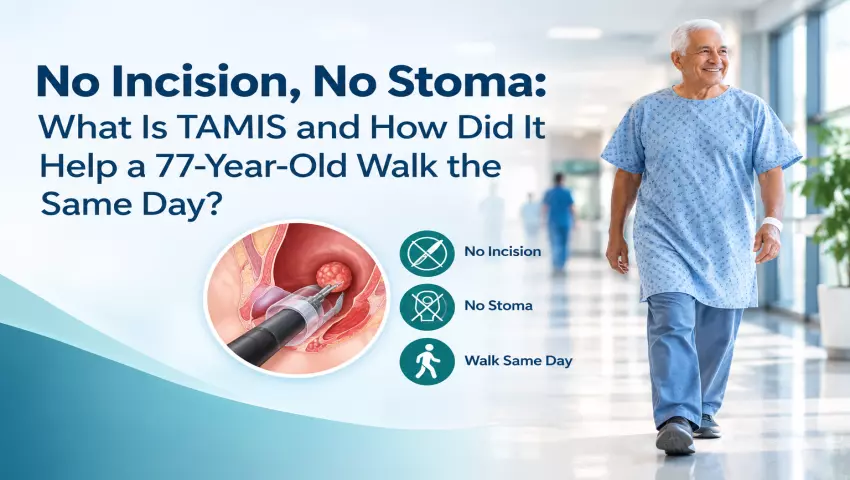
According to Dr. Humayun Specialty Hospital in T Nagar, a 77-year-old man had a 5 cm rectal polyp removed using TAMIS (Transanal Minimally Invasive Surgery), with no abdominal incision and no stoma. He ate within hours, walked the same day, and went home the next morning. In this post, we explain what happened, what TAMIS surgery is, who it may suit, and which symptoms should never be ignored.
The Case at a Glance:
The patient, a 77-year-old man, approached doctors with rectal bleeding and changes in his bowel habits. Investigations found a broad-based polyp in the middle of the rectum, about 7 cm from the anal opening. The polyp measured about 5 cm. Because of its size and shape, the hospital said routine colonoscopic removal was not suitable.
The surgical team was led by Dr Pinak Dasgupta, Director and Chief of Gastrointestinal Services at the hospital. They removed the polyp through the natural opening using TAMIS. According to the hospital, the recovery looked like this:
- Procedure time: about one hour
- Food: resumed within six hours
- Mobility: walking the same day
- Discharge: the following morning
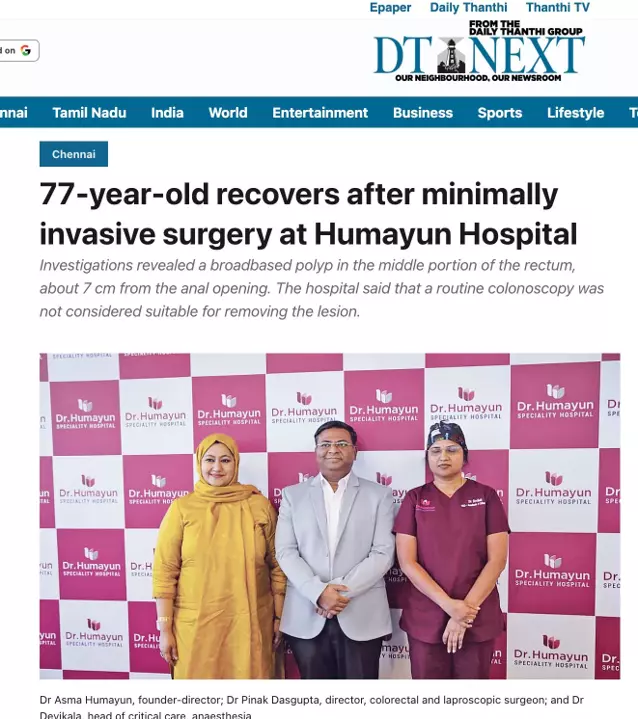
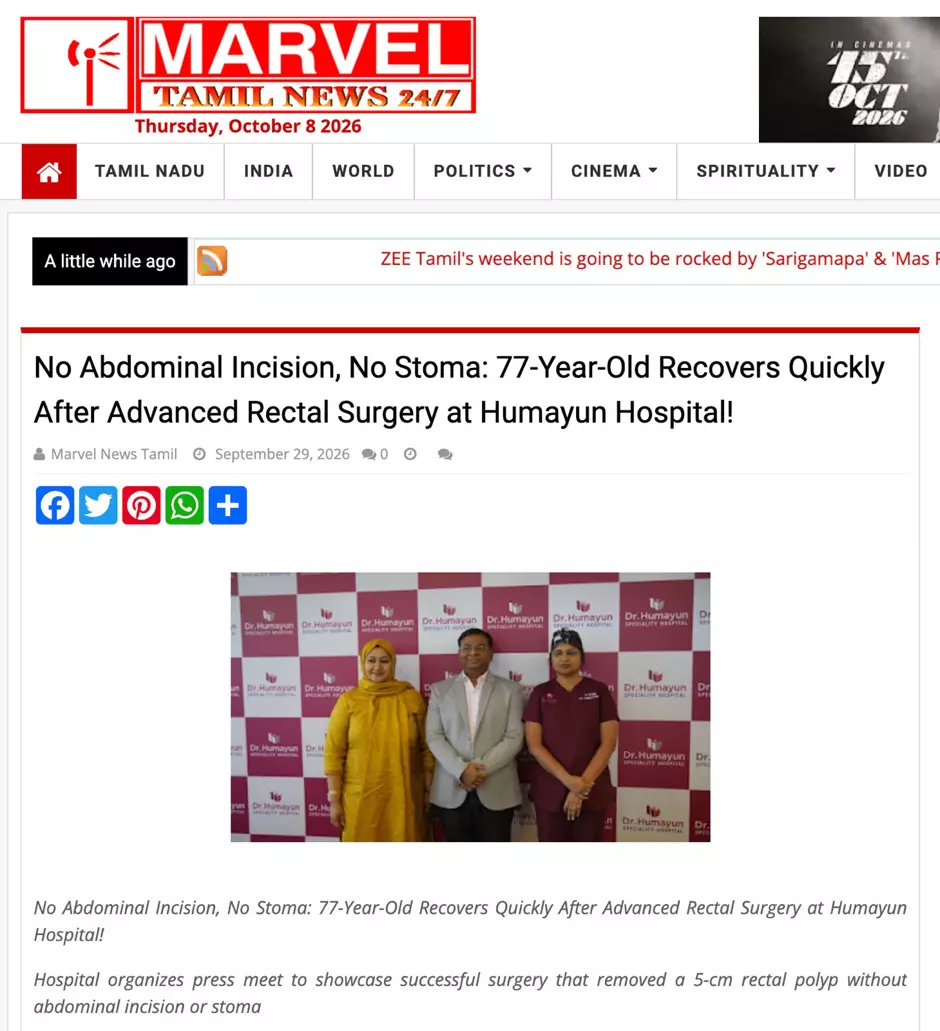
The hospital also held a press meet to share the case. Dr Asma Humayun, the hospital’s founder-director, was present along with the surgical and anaesthesia team.
What Is TAMIS Surgery?
TAMIS stands for Transanal Minimally Invasive Surgery. As the name suggests, the surgeon reaches the growth through the anus, so there is no need to cut open the abdomen.
Here is the basic idea:
- A soft, flexible port is placed through the anal opening.
- A small camera and fine laparoscopic instruments are passed through the port.
- The surgeon views the rectum on a screen and removes the growth under magnified vision.
TAMIS was first described around 2010. It is used to remove benign rectal polyps and, in selected patients, certain early-stage rectal tumours. It is considered an organ-preserving option because the rectum itself is not removed.
TAMIS vs. Traditional Abdominal Surgery:
Why "No Incision, No Stoma" Matters?
A stoma is an opening created on the abdomen so that waste can leave the body into a bag. It may be temporary or permanent, and many patients find the idea daunting. Avoiding it, where it is medically safe to do so, can make a real difference to a patient’s confidence and quality of life.
For an elderly patient, the benefits of avoiding major abdominal surgery can be even more important. A smaller procedure generally means less physical stress on the body, which is why early eating and walking, as seen in this case, are encouraging signs. Dr Dasgupta noted that TAMIS can help selected patients avoid major abdominal surgery and lighten the physical burden of treatment.
Who Can Have TAMIS?
TAMIS is not meant for everyone. Doctors usually consider it for:
- Benign polyps that are too large or flat to be removed during a routine colonoscopy
- Selected early-stage rectal lesions that have not spread deeply
Before deciding, the medical team typically checks the lesion’s size, position, and depth, using tests such as a digital rectal examination, colonoscopy, biopsy, and MRI. In many hospitals, the case is also discussed by a team of specialists. If the lesion is more advanced, a bigger operation may still be necessary.
Symptoms You Should Never Ignore:
The patient in this case came in because of bleeding and a change in bowel habits. These are common symptoms and are often brushed off as piles. Please see a doctor if you notice:
- Blood in the stool or bleeding from the rectum
- A lasting change in bowel habits, such as new constipation or loose stools
- Mucus in the stool
- A feeling that the bowel is not emptying fully
- Unexplained weight loss or tiredness
If you are over 50, or have a family history of colon or rectal problems, ask your doctor about screening colonoscopy. Many polyps can be found and removed early, before they cause serious problems.
Things to Keep in Mind:
A success story is encouraging, but a few points deserve a balanced view:
- This is a single case, reported by the hospital. It is not a guarantee of the same result for every patient.
- The reports we reviewed do not state whether the polyp was benign or cancerous, so no conclusion should be drawn on that.
- The right treatment always depends on the individual’s age, health, the lesion’s features, and the surgeon’s assessment.
Conclusion:
The Chennai case is a good reminder that modern surgery is moving towards smaller, gentler approaches, and that early diagnosis opens up more options. TAMIS will not suit every patient, but for the right one it can mean no abdominal cuts, no stoma and a quick return home.
If you or a family member has rectal bleeding or a change in bowel habits, do not wait. Speak to a gastroenterologist or colorectal surgeon and get checked.
Sources: Marvel News Tamil (29 September 2026); Times of India (TNN) report; DT Next report on the Dr Humayun Specialty Hospital case; hospital press meet coverage by Manam TV News and Chennai Views; published medical literature on TAMIS.
Frequently Asked Questions:
TAMIS (Transanal Minimally Invasive Surgery) removes growths from the rectum through the anus using a camera and fine instruments, without cutting the abdomen.
It can be an option for suitable patients because it avoids major abdominal surgery. Whether it is right for you depends on your overall health and the lesion, so please consult a specialist.
It varies. In the Chennai case, the hospital reported that the patient ate within six hours, walked the same day, and went home the next morning.