
- 20/08/2026
- by Dr. Pinak Dasgupta
- Blog
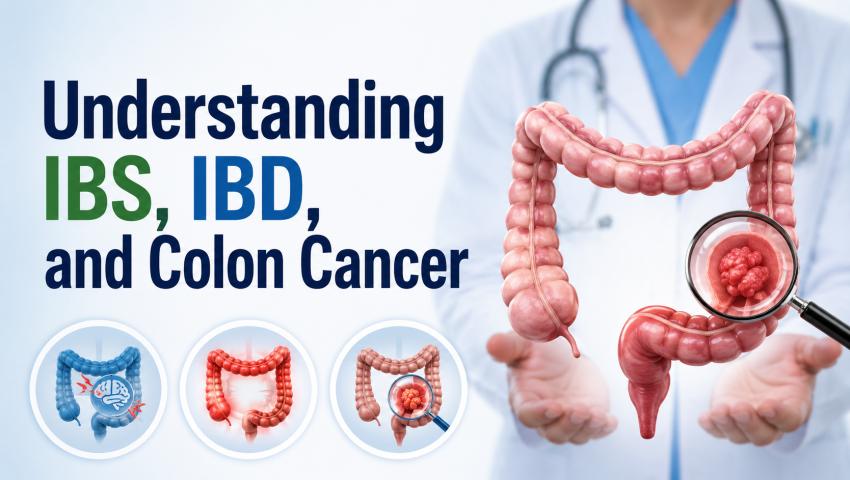
Stomach pain today, bloating tomorrow, and by next week you are googling “IBS vs colon cancer” at 1 AM. Sounds familiar? You are not alone. Lakhs of people search for the difference between IBS and IBD, or wonder if their symptoms could actually be colon cancer, every single day.
Here’s the tricky part — IBS symptoms, IBD symptoms, and early colon cancer symptoms can look almost identical from the outside. But what is happening inside your gut is completely different in each case, and knowing which one you are dealing with can genuinely be a life-changing difference.
According to Dr. Pinak Dasgupta, a name well known in gastro-surgical circles at ALVUS Care, most confused patients just need clarity, not panic — whether that means simple lifestyle advice or proper Colon Cancer Treatment in Chennai.
What Is IBS (Irritable Bowel Syndrome)?
Irritable Bowel Syndrome (IBS) is what doctors call a “functional” gut disorder. In simple words, your intestines look completely normal on tests and scans, but they don’t function the way they should.
Common IBS symptoms include:
- Abdominal pain or cramping, usually relieved after passing stool
- Bloating and gas
- Diarrhoea, constipation, or a mix of both
- Symptoms that come and go, often triggered by stress or certain foods
If you’ve been searching for a dependable IBS Disease Treatment in Coimbatore, the key is not chasing one quick fix but working with a doctor who looks at your diet, stress levels, and symptom triggers together, rather than treating each flare-up in isolation.
What Is IBD (Inflammatory Bowel Disease)?
Inflammatory Bowel Disease (IBD) is a completely different disease. Unlike IBS, IBD is not “functional” — it is a real, visible, chronic inflammation of the digestive tract. It includes two main conditions:
- Crohn’s Disease — can affect any part of the digestive tract, from mouth to anus
- Ulcerative Colitis — affects the colon and rectum specifically
Typical symptoms include:
- Blood in stool
- Persistent diarrhoea
- Unexplained weight loss
- Fatigue and low-grade fever
- Abdominal pain that doesn’t fully go away
This is where things get serious. Long-standing, poorly controlled IBD is associated with a higher risk of developing colorectal cancer — which is exactly why regular monitoring matters so much for IBD patients.
What Is Colon Cancer?
Colon cancer (a form of colorectal cancer) usually develops slowly, often starting as small growths called polyps on the inner lining of the colon. Over years, some of these polyps can turn cancerous if left undetected.
Warning signs of colon cancer include:
- Blood in stool or rectal bleeding
- A noticeable change in bowel habits that persists for weeks
- Unexplained weight loss
- Persistent abdominal pain or cramping
- A feeling that the bowel doesn’t empty completely
This is also why choosing the best laparoscopic surgeon in Chennai matters so much once a diagnosis is confirmed — the right surgical hands can make the difference between a long, difficult recovery and a smooth one.
IBS vs IBD vs Colon Cancer: Key Differences
Overlapping Symptoms and Diagnostic Challenges:
Here’s the honest truth — abdominal pain, bloating, and altered bowel habits show up in all three conditions. This overlap is exactly why so many people search things like “do I have IBS or colon cancer” or “IBS or colon cancer anxiety” online.
Red flags that should push you toward a doctor visit, not more Googling:
- Blood in stool (bright red or dark/tarry)
- Unexplained, unintentional weight loss
- Symptoms that started after age 45-50 for the first time
- Family history of colon cancer or IBD
- Symptoms that keep getting worse instead of settling down
- Waking up at night specifically due to bowel symptoms (unusual for IBS)
If your symptoms fall into “comes and goes, manageable, no blood, no weight loss” — it is more likely IBS. If they are persistent, worsening, or accompanied by blood and weight loss, it’s time to distinguish between IBD and colon cancer with proper testing.
How Doctors Diagnose Each Condition?
Getting an accurate diagnosis is only half the journey — the other half is having a specialist who can act on it confidently. This is often where patients start looking for the best laparoscopic surgeon in Chennai, someone who can confirm the diagnosis and take over treatment without unnecessary delays.
- Detailed history and symptom pattern — how long, how often, any triggers
- Blood tests — checking for inflammation markers, anaemia, infection
- Stool tests — to rule out infection and check for hidden blood or inflammation markers like calprotectin
- Colonoscopy — the gold standard test. It lets the doctor directly see the colon lining, take biopsies if needed, and rule out or confirm IBD or colon cancer
- Imaging (CT/MRI) — used especially in Crohn’s disease or if cancer is suspected, to check the extent of disease.
For Colon Cancer Treatment in Chennai, a consultation with an experienced gastro-surgical team — like the one led by Dr. Pinak Dasgupta at ALVUS Care — usually follows this exact step-by-step process, so nothing is missed and nothing is over-treated.
Treatment and Management Options At ALVUS Care:
IBS:
- Low FODMAP diet and trigger-food tracking
- Stress management and gut-directed therapy
- Medications for symptom relief
IBD:
- Anti-inflammatory and immune-modulating medications
- Biologic therapies for moderate-to-severe cases
- Surgery when medication isn’t enough
Colon Cancer:
- Surgical removal, often via minimally invasive techniques
- Chemotherapy and/or radiation, depending on stage
- Regular follow-up and surveillance colonoscopies
Patients often search for IBS Disease Treatment in Coimbatore hoping for a quick fix, but it works best as a combination approach — tailored to the individual, not a single medicine.
As a practising Robotic Surgeon in Chennai with 21 years of hands-on experience at ALVUS Care, Dr. Pinak Dasgupta has seen how robotic-assisted techniques make colon cancer surgery more precise — smaller incisions, less blood loss, and faster recovery.
Prevention Tips and When to See a Doctor in Chennai:
While you can’t fully “prevent” IBS or IBD, and colon cancer risk depends on multiple factors, there are practical steps that genuinely help:
- Get screened on time — colonoscopy screening is generally recommended starting age 45, or earlier if you have a family history. Even if you’re simply exploring Colon Cancer Treatment in Chennai as a precaution, an early consultation costs far less than a delayed diagnosis, both financially and emotionally
- Don’t ignore blood in stool — even a small amount, even once, deserves a check-up
- Track your symptoms — note frequency, triggers, and any changes over 2-3 weeks before assuming it’s “just stress”
- Eat fibre-rich, balanced meals and stay physically active
- Don’t self-medicate for months — if symptoms persist beyond 3-4 weeks despite home remedies, get evaluated
See a doctor immediately if you notice:
- Blood in stool
- Unexplained weight loss
- Persistent change in bowel habits
- Severe or worsening abdominal pain
- A family history of IBD or colorectal cancer
Conclusion: Know the Difference, Act Early
IBS, IBD, and colon cancer may share symptoms on the surface, but they’re fundamentally different — one functional, one inflammatory, and one malignant. Knowing which one you’re dealing with matters more than guessing.
If unexplained digestive symptoms are wearing you down, don’t wait it out. Book an appointment with Dr. Pinak Dasgupta and the team at ALVUS Care — whether you need simple lifestyle changes or advanced care with a trusted Robotic Surgeon in Chennai.
Your gut has been trying to tell you something — it might be time to listen. Book an appointment today and get the clarity you deserve.
Frequently Asked Questions:
IBS pain usually comes and goes and eases after a bowel movement, with no blood or weight loss. Colon cancer symptoms tend to persist and worsen — rectal bleeding, unexplained weight loss, or incomplete bowel emptying. Persistent symptoms after age 45 need a colonoscopy, not more searching.
Yes. IBS is a functional gut disorder — it doesn’t damage the intestines or raise cancer risk. With the right IBS treatment (diet changes, stress management, medication), most people manage it well long-term.
No. Unlike IBD, IBS doesn’t cause inflammation, so it doesn’t raise colorectal cancer risk. This is one of the biggest differences between IBS and IBD.
IBD (Crohn’s disease and ulcerative colitis) is chronic gut inflammation; colon cancer is a malignant growth, often starting from polyps. Long-standing, poorly controlled IBD does raise colorectal cancer risk over time — which is why regular monitoring matters for IBD patients.
Blood tests, stool tests, and a colonoscopy (the gold standard) are used to diagnose and rule out colon cancer or IBD. CT/MRI imaging is added when Crohn’s disease or cancer is suspected.