
- 23/06/2026
- by Dr. Pinak Dasgupta
- Blog
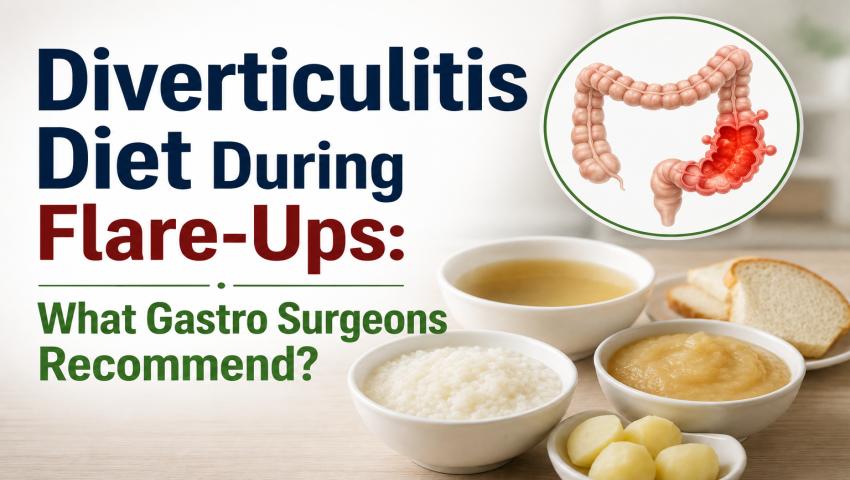
Diverticulitis is a painful condition. It happens when small pouches in your colon wall become infected or inflamed. During a flare-up, what you eat matters a lot.
The wrong food can make symptoms worse. The right diet helps your gut heal faster.
Dr. Pinak Dasgupta, one of the most trusted names in Diverticulitis Treatment in Chennai, recommends a careful, step-by-step dietary approach during flare-ups. As a renowned Proctologist in Chennai and Best GI Surgeon in Chennai at GEM Hospital, he has treated thousands of patients with colon and rectal conditions over 21 years.
In this blog, we break down exactly what to eat, what to avoid, and how to transition your diet safely.
What Is Diverticulitis? A Quick Overview?
Diverticulitis develops from a condition called diverticulosis. In diverticulosis, small bulging pockets (called diverticula) form in the lining of the digestive tract — usually in the colon.
When these pockets get inflamed or infected, it becomes diverticulitis.
Common symptoms include:
- Sharp abdominal pain, usually on the lower left side
- Fever and chills
- Nausea or vomiting
- Changes in bowel habits
- Bloating and gas
A flare-up can last several days. Diet plays a critical role in recovery.
Phase 1: Clear Liquid Diet — The First Step
During an acute flare-up, your colon needs complete rest. Solid foods — even soft ones — can irritate the inflamed bowel.
Dr. Pinak Dasgupta advises starting with a clear liquid diet for the first 2 to 3 days of a flare-up.
What to include:
- Plain water
- Clear broths (vegetable or chicken — low sodium)
- Ice chips
- Plain gelatin (without fruit pieces)
- Clear fruit juices (apple juice, white grape juice — no pulp)
- Plain coconut water
- Oral rehydration solutions (ORS)
Why this helps: These liquids keep you hydrated without putting pressure on the inflamed colon. They allow bowel rest and reduce infection risk.
Important: Do not continue the clear liquid diet for more than 2 to 3 days without medical supervision. Your body needs nutrition to heal.
Phase 2: Low-Fibre Diet — Transitioning to Solids
Once the acute pain starts to ease — usually after 2 to 3 days — you can slowly move to a low-residue (low-fibre) diet. This phase typically lasts for 1 to 2 weeks.
The goal is to reduce the amount of stool your colon produces. This helps the bowel heal without strain.
Foods you can eat:
- White rice, white bread, plain pasta
- Boiled or scrambled eggs
- Well-cooked, soft vegetables (peeled potatoes, carrots — without skin)
- Ripe bananas
- Canned or cooked fruits (no seeds or skin)
- Plain yoghurt (low-fat)
- Soft, tender cooked chicken or fish
- White rice porridge (kanji) — a great Indian option
- Idli and plain dosa (no spices, no chutney)
Foods to avoid in this phase:
- Raw vegetables and salads
- Whole grains and brown rice
- Beans, lentils, and dal
- Nuts and seeds
- Spicy curries and masala
- Fried and oily foods
- High-fibre fruits like guava and papaya
Keeping meals light and simple is key. Avoid large portions. Eat 5 to 6 small meals a day instead of 3 big ones.
Phase 3: Returning to a High-Fibre Diet — Long-Term Health
Once the flare-up fully resolves — and your doctor confirms it — you should gradually shift to a high-fibre diet. This is the most important step for preventing future flare-ups.
A low-fibre diet over the long term actually increases the risk of diverticulitis. High-fibre foods keep stools soft and regular, reducing pressure in the colon.
Introduce these foods slowly:
- Whole grains — brown rice, oats, whole wheat rotis
- Fresh fruits — apples, pears, guava (with skin)
- Vegetables — leafy greens, drumstick, beetroot, bottle gourd
- Legumes — masoor dal, moong dal (well-cooked, soft)
- Flaxseeds and psyllium husk (isabgol)
Add one new high-fibre food every 3 to 4 days. Watch for any discomfort or pain. If symptoms return, speak to your surgeon immediately.
Target: 25 to 35 grams of dietary fibre per day for adults.
Hydration — Often Overlooked, Always Essential:
Many patients focus only on food. But water is equally important.
Drinking enough water helps fibre do its job. It softens stool and prevents constipation — which is a major trigger for diverticulitis flare-ups.
Dr. Pinak Dasgupta recommends: Drink at least 8 to 10 glasses of water per day. Increase intake during hot weather, which is common across Chennai and Tamil Nadu.
Avoid carbonated drinks, alcohol, and caffeine during a flare-up. These can irritate the gut lining and worsen inflammation.
Foods to Completely Avoid During a Flare-Up:
Whether you are in Phase 1 or Phase 2, certain foods must be strictly avoided:
- Spicy foods — red chilli, pepper, masala gravies
- Fried and fatty foods — pakoras, samosas, deep-fried snacks
- Red meat — mutton, beef, processed meats
- Seeds and nuts — popcorn, sesame, sunflower seeds (in the acute phase)
- Alcohol — even small amounts can inflame the colon
- Carbonated beverages — sodas, aerated drinks
- Dairy (for some patients) — if lactose intolerant, avoid milk-based foods
Every patient is different. Your surgeon will guide you based on your individual condition, test results, and recovery progress.
When to See a Specialist in Chennai?
Diet management alone is not always enough. Some cases require medical or surgical treatment.
You must consult a specialist immediately if you experience:
- High fever (above 38.5°C)
- Severe, persistent abdominal pain
- Inability to eat or drink
- Blood in stool
- Symptoms that do not improve after 2 to 3 days
Dr. Pinak Dasgupta is one of South India’s most respected colorectal and robotic surgeons. He is currently heading the colorectal department at GEM Hospital, Chennai. With over 15,000 surgeries completed and 20,000+ happy patients, he is widely recognised as a leading Proctologist in Chennai and the Best GI Surgeon in Chennai for complex conditions.
He offers advanced, minimally invasive options — including robotic and laparoscopic surgeries — that ensure faster recovery, minimal pain, and shorter hospital stays.
He was awarded among the Top 10 Most Promising Colorectal Surgeons of India in 2024, and has trained more than 500 surgeons globally.
Quick Dietary Summary Table:
Dr. Pinak Dasgupta – Best Robotic Colorectal & Hernia Surgeon, Chennai
📍 GEM Hospital, MGR Main Rd, Thiruvengadam Nagar, Perungudi, Chennai – 600096
📞 8811091676
📧 drpinakdasgupta12@gmail.com
🌐 www.roboticsurgeonpinak.com
Conclusion:
Managing diverticulitis starts with what you put on your plate. Follow the right diet at the right stage — and your gut will heal faster.
But do not rely on diet alone. If symptoms are severe or keep coming back, always consult a specialist.
Dr. Pinak Dasgupta, a leading Proctologist in Chennai and the Best GI Surgeon in Chennai, offers expert care for Diverticulitis Treatment in Chennai at GEM Hospital. With 21+ years of experience and 15,000+ surgeries, he is the trusted name for colorectal health in South India.
Book your consultation today — and take control of your gut health.

